Okay, so you've got this amazing idea for a book and you dive right in and write until you run out of go. Then what?
You put it in a metaphorical drawer (usually a file on your computer) and forget about it? You leave it open on the desktop and worry about it? You come back to it each day, but don't write more than a few lines? You start to add to it, but it flounders because you aren't really sure where it's going? All writers have this problem - the story that's going nowhere. The story that's long on idea, but short on execution. You move on to the next idea. You might repeat yourself in an endless cycle of false starts. I know I have.
These days though, I finish everything I write - good, bad or indifferent - because finishing something allows me to move on properly.
Here's how I write now. I get a good idea, or at least what I think is a good idea, and I immediately pose it as a 'what if' question. For The Finish it was 'what if an 18th century prostitute woke to find a dead man in her bed?'
Then I think how will this look as the start of a book? What is she doing? Where is she doing it?
Next up I go straight to the end. What's happened by the end of the book? Has she survived? Has the situation resolved itself? If so, how?
Having envisaged the opening scene and the end scene, I decide which characters will aid her progress and which will cause problems. In Kitty's case it's fairly simple - without giving you the end, I need her to survive because she features in three more books. However, the situation is dire, with the possibility of hanging, if she is brought to trial and found guilty of murder. She lives in a brothel so we have the madam, Mother Shadbolt, and various other prostitutes. We also have a number of clients and the 'bully' on the door. A detective story is plot driven, as the character moves from one set of clues to the next. By its very nature it also requires twists and turns. A good 'who dun it' shouldn't give up the actual murderer easily. It should make the reader think.
All this said, any story can follow this kind of development plan. From beginning to end and join up the points inbetween.
Some people can write straight through, from idea to actuality. That's how I work, but I can only do it because, having been trained in scriptwriting for film, I've internalised the process and format. Some people need to map it all out. I would say, for safety's sake make lots of notes and plan, plan, plan.
Here's some bullet points to help you plot.
1. Have a great hook and make sure it's in the first five pages.
2. Establish the character's goal in the first quarter of the book.
3. Establish all the major characters in the first quarter of the book.
4. Know how your book is going to end.
5. Know what it is that will happen at the end of the first quarter that will propel the character forward into resolving the matter at hand.
6. Chart out the important points of the story on a timeline, taking caring to consider rising action.
7. Know what it is that will happen at the end of the third quarter that will begin to work towards the end of the story.
8. At the end, tie up all the loose ends - explain red herrings
Showing posts with label prostitute. Show all posts
Wednesday, 14 October 2015
Sunday, 30 August 2015
What about location - Covent Garden
Kitty Ives, the main character in The Finish, lives in Covent Garden, which still exists today in pretty much the same state that it did back in the 18th century, save that in the middle now, there's what is called the Floral Market, and some of the buildings have been rebuilt, albeit on the same footprint.
Here, I take a look at Covent Garden then and now in this series of photographs and prints.
And here's those same arches today.
The arches below are those on the east side of James Street, in the Great Piazza.
Here's the Floral Hall in the centre of the square. It wasn't here in the 18th century, but it was occupied by a large number of wooden shacks, of which one was called the 'Finish', so named because it was the last place to close, in the early hours of the morning. The square building in the centre of the pic shows the location of the 'Finish'. In the pic above you can also see down the east side of the square. The little Piazza, on the far right of this pic, burned down in March 1769, so this is all rebuilt.
Opposite the 'Finish' was the brothel run by a Mother Gould. It was over a distiller's by the name of John Bradley. In my book, Mother Gould has been renamed Mother Shadbolt, but John Bradley and the distillery are one and the same. This is it today.
We've already seen the picture below, but this is now a blown up portion of it, which shows the little Piazza as it would have been before the fire.
Here, I take a look at Covent Garden then and now in this series of photographs and prints.
Covent Garden - Hogarth - It's often shown the other way round. Prints were copied and reprinted many times and the image flipped. The writing above the door on the left reads correctly, and if you compare the present day photograph below, you can see that the church and the building on the right are still in situ. Also, check out that square column on the church's portico. See above there it is? Now look at the photo I took. Yes, there's that square column. Hogarth had a good eye for detail. Btw, you can visit Hogarth's house for free in Chiswick. I'll be paying it a visit soon to report back.
Here's another take on this, below.
Here you can see the arches of the Piazza to the West of James Street
The arches below are those on the east side of James Street, in the Great Piazza.
And below, the same today, although now rebuilt.
At the end of this row of arches is an entrance to the Opera House, although in the 18th century this corner of the Piazza would have had the entrances to both the Bedford Head Coffee House on the right, and on the left the Shakespeare's Head Tavern. The Covent Garden Theatre, as the Opera House was called, was situated behind these establishments. There may have been a entrance here to the theatre too, but it would have been nothing more than a door. Well, in fact, that's all it is today.
Here' then you can see Covent Garden from the east, looking West to the Church. King Street runs off the north side of Covent Garden and to the south side is Henrietta Street.
Here's the Church today. The 'entrance' is actually just a blank. There's no door there and there never was. The door is at the rear, in the churchyard.
The actual entrance to the Church in Covent Garden. It's accessed through this quaint alley from King Street. Just to confuse visitors to London, The Covent Garden Church is called St. Paul's, like the cathedral about a mile to the east.
On the corner of Henrietta Street was the Unicorn Tavern, where Kitty attends a coroner's inquest. Below is the building today - rebuilt as a Nat West Bank.
Opposite the 'Finish' was the brothel run by a Mother Gould. It was over a distiller's by the name of John Bradley. In my book, Mother Gould has been renamed Mother Shadbolt, but John Bradley and the distillery are one and the same. This is it today.
We've already seen the picture below, but this is now a blown up portion of it, which shows the little Piazza as it would have been before the fire.
Continuing into the corner of the Little Piazza, in the 18th century we would find the alley way to the privies, which also connected Charles Street with Covent Garden. Next to the alley was the Bedford Arms tavern.
Today, the London Transport Museum occupy this space in the corner, but there are still toilets here in what was then Tavistock Court.
The Finish is part one of a four part series called Venus Squared. Set in 1769, it tells the story of Kitty Ives, a prostitute, forced to solve a murder for fear of swinging from the gallows.
What's it all about, Kitty?
Shock Horror - Prostitute Kitty Ives in murder intrigue
READ HER EXCLUSIVE STORY
The Year of our Lord,
1769
In which I tell of a
man’s death.
In the dead of night
when our door is locked against thieves, dogs and the devil in disguise, the
moans of men come to my ears. Some promise themselves many times over, such is
the nature of their lust. Yet when daylight seeps through the shutters, we
whores are cast aside and our lovers go out into the fine morning as if bound
on a journey to America. Well, I have been there; transported for the sin of
thievery, though I found a way to return. It is a story I will tell in due
course, for more recently I fought to keep myself from the gallows and I fear I
am going mad.
William Westman.
There, I have told you my tormentor’s name, though doubtless you will think him
no tormentor at all.
At first I thought he
was one of our usual gentleman callers. It was on such a night as this, cold
and damp, with a hint of frost and the air abroad swirling with mysterious
poisons. He entered our establishment through John Bradley’s gin shop, on the
corner of Covent Garden and Russell Street. He offered a fortune; five guineas
and a promise of more if I would let him use me until daybreak. Mother Shadbolt
could barely contain herself and welcomed him across our threshold as if he was
the prodigal son, her Bible clutched to her bosom with one hand while she
pocketed his cold hard cash with the other. He smelled of hashish and ale, but
wore well-tailored garments and clean boots. His face was soft and not a bit
lined or careworn. I filled a dish and pressed an orange segment against my
lips. He grasped me about the waist and kissed away the juice. I thought I saw
a dark shadow at his shoulder, but thought little of it. Many men carry their
ills thus. It is not for me to judge them.
I took him to my
boudoir and asked what delights he had in mind. He did no more than raise my
petticoats, sink to his knees and taste the region hidden from view. I gasped
and pushed him away, pretending to be coy. Some men require soft words and
innocence, while others prefer a harsher tone. Others still, need silence. They
do the deed and are gone. I trusted I would not have to do more than was
absolutely necessary, for I was tired and wanted an easy time of it.
My cully removed his
wig. His own hair was fine and auburn in colour, and, for such a young man,
receding a little at the temple. The fire crackled in the grate, casting a
golden hue over our bodies. I judged him in need of kindness and poured two
small glasses of gin, turned back the bedcovers, and beckoned him forth. He
had, after all, paid handsomely, and I was obliged to perform until such time
as exhaustion descended on him.
Westman reached out
to stroke my décolletage with ink-stained fingers. I let slip my chemise and
led him to the bed, whereupon he cosseted me with fine sentiment and laboured
to give me pleasure, before satiating his own needs. In truth, I feigned my
enjoyment. I had already been bedded that afternoon by no less than three men,
the first of whom had brought me much satisfaction (he being a young buck with
energy a-plenty), the second being a regular client whose needs were catered to
by my pretending to innocence and he to my ‘first’ deflowering. The third was
an elderly gentleman who often sleeps in our dining parlour. From time-to-time
he relieves himself. It often comes to naught. I believe he enjoys our wit and
the warmth of the fireplace more than anything else.
This then is what happened after Westman’s desires had been
satiated: we fell on the gin, gave a toast to Venus, talked a little of his wish
for literary success, and mine for financial freedom. He asked how it was that
a seemingly educated gentlewoman, such as I, might find herself prostituted
thus. I did no more than inform him of my father’s demise and our family’s fall
from grace.
“A woman has three choices in life,” I said. “She may marry.
She may become a servant, or she may become a whore.”
“And you became the latter? But why?”
“I had no dowry. My mother sent me to London to work as a
governess.” I took my gin up and knocked it back in one. “Mother Shadbolt
intercepted me. She promised me riches beyond measure. I was young and
foolish.”
My cully laughed and
topped up my glass. He was delighted to have found such an educated whore. As
the night wore on we became more and more inebriated. You may find it hard to
comprehend, but when I woke the next morning I was pinned beneath a dead man –
and not just dead, but bloody and terrible. What could I do but scream and claw
my way out from beneath him? I was
covered in his blood like a wild woman who has savaged and fed on a beast. This
could not be. It could not. I would be blamed. They would call me a murderess. I
would swing from the gallows. Few would stand up for me. I was no one.
The Finish is the first in a four part series, Venus Squared, by Angela Elliott. It tells the story of Kitty Ives, who is forced to investigate a murder, or swing from the gallows. Published by Crux Publishing Ltd.
Wednesday, 12 August 2015
A woman has three choices
Covent Garden, long a centre for hedonistic pleasure, is a dirty melting pot of whores and harridans, aristocrats and artisans, actors and drunks. It is 1769 and these are violent times. Prostitute, Kitty Ives, takes a man to her bed and wakes to find him dead atop her. Fearing the gallows, so begins Kitty's quest to uncover the identity of the murderer. Will she be successful? Or will she be convicted of a murder she did not commit?
The idea for the series came from a play I'd written
called Scratching Fanny of Cock Lane. Scratching Fanny was a 'real'
ghost, and Cock Lane a real street near Smithfield. In the early 1760s
Dr. Samuel Johnson was called to investigate the ghostly goings on. It
was reported in James Boswell's Life of Johnson.
I've written about the history of the Theatre Royal
Drury Lane from the 16th century through to the present day. I've also
written about the 5th Marquis of Hastings, which was set in the mid
19th century, called The Pocket Venus, and I have also penned scripts
about Alex Smith, who one of the Bounty mutineers. This was set at the
beginning of the 19th century and called The Last Mutineer. All were
for TV/film. My book Some Strange Scent of Death was set in 1900, and
the Cock Lane play, mentioned above, in 1763.
I chose the 1760s after studying the period carefully,
and coming to a conclusion about the state of crime and prostitution in
Covent Garden at that time. It was an exciting period. The Fielding
Brothers had established the first detective service in the Bow Street
Runners. The Seven-Years War had just ended. There were riots in London
over the influx of French silk workers. America was about to become a
nation. Secret Gentlemen's Clubs abounded. Ben Franklin and others had
made electrical experiments. Grave robbing was common-place. Captain
Cook had just sailed for Tahiti to observe the Transit of Venus. King
George III had ascended the throne, and more women wrote and published
novels than did men.
Saturday, 18 July 2015
10 libertine and risqué novels you just have to read
If you are an avid reader, like I am, then you really need to check out these libertine and risqué novels. Strictly speaking, the libertine novel had its origins in France. Its heyday ended with the French Revolution. However, there are many brilliantly written novels from other parts of the world, each of which touch on the same subject matter. Here's my top ten selection, which should grace every avid readers shelves.
Where to begin? He wrote this book in 37 days, whilst locked up in the Bastille in 1785 for sexual deviancy and blasphemy. His name is the reason we have the word 'sadist'. He wrote many other books, some just as scurrilous as this one. 120 days remains a work of supreme endeavour. You do not want to leave this off your shelf.
Read more
Even randy little James Boswell called this book 'a most licentious and inflaming book'. Ever since its publication in 1749, it has been shrouded in mystery and controversy. It was written whilst he was in debtors prison. It is one of the most prosecuted and banned books of all time.
Read more
Moll Flanders was one of the first novels written almost as social commentary. It follows poor Moll through her career in crime and prostitution, and her eventual transportation to the colony of Virginia.
Read the book
An absolute classic of the erotic genre. Precedes Fifty Shades, and is way better, by 57 years. A beautiful young French woman, her lover. A splendid mansion near Paris. An elite secret society. Sexual fantasies abound.
Read the book
Mirbeau was a French journalist and playwright. The Torture Garden was published in 1899 at the height of the Dreyfus affair. The book sought to expose the corruption of colonialism and civilisation, wrapped up in deliciously tortuous S&M, all of which takes place in a beautiful Chinese garden. Not for the faint at heart.
Read the book
First published in 1899, The Awakening was contentious, right from the start. It explored female sexual desire and feminism. Insofar as it is almost exactly the same story as Ibsen's The Doll's House, it suffered from having been written by a woman who had already scaled literary heights. The Chicago Times Herald said of it: "It was not necessary for a writer of so great refinement and poetic grace to enter the over-worked field of sex-fiction".
Read the book
When this novel came out in 1928, the then editor of the Sunday Express said that he would 'rather give a healthy boy or a healthy girl a phial of prussic acid than this novel." That said, there is only one, rather obtuse, sexual reference in it. Few critics rate it as a classic novel, however, it is a classic in terms of storyline, being the first novel of its kind to explore Lesbianism. Read The Guardian's report here
Read the book
The 120 days of Sodom by the Marquis de Sade
Read more
Sodom, or the Quintessence of Debauchery by John Wilmot, the Second Earl of Rochester
Sodom is an obscene closet drama published in 1684 and attributed to the randy old Earl of Rochester (played, quite wonderfully in the film Libertine, by Johnny Depp). In the play, the king is called Bolloxinian and the queen, Cuntigratia. Aside from the obvious, the play is actually also a satire on the court of Charles II and his toleration of the Catholic Church.
Fanny Hill or Memoirs of a Woman of Pleasure by John Cleland
Even randy little James Boswell called this book 'a most licentious and inflaming book'. Ever since its publication in 1749, it has been shrouded in mystery and controversy. It was written whilst he was in debtors prison. It is one of the most prosecuted and banned books of all time.
Read more
The Fortunes and Misfortunes of the Famous Moll Flanders by Daniel Defoe
Read the book
The Story of O by Pauline Réage
Read the book
Lady Chatterley's Lover by DH Lawrence
DH Lawrence wrote, “I want men and women to be able to think about sex, fully, completely, honestly, and cleanly,” in his introduction to Lady Chatterley’s Lover. The first edition was privately printed in Italy, and it wasn't available at all in the USA until 1959 - and yet it is undoubtably a classic.
Torture Garden by Octave Mirbeau
Read the book
The Awakening by Kate Chopin
Photo: Kate ChopinFirst published in 1899, The Awakening was contentious, right from the start. It explored female sexual desire and feminism. Insofar as it is almost exactly the same story as Ibsen's The Doll's House, it suffered from having been written by a woman who had already scaled literary heights. The Chicago Times Herald said of it: "It was not necessary for a writer of so great refinement and poetic grace to enter the over-worked field of sex-fiction".
Read the book
The Well of Loneliness by Radcliffe Hall
When this novel came out in 1928, the then editor of the Sunday Express said that he would 'rather give a healthy boy or a healthy girl a phial of prussic acid than this novel." That said, there is only one, rather obtuse, sexual reference in it. Few critics rate it as a classic novel, however, it is a classic in terms of storyline, being the first novel of its kind to explore Lesbianism. Read The Guardian's report here
Read the book
Tropic of Cancer by Henry Miller
Tropic of Cancer was "notorious for its candid sexuality". Published in 1934 in Paris, it was banned in the States and led to obscenity trials in the 1960s. It was not banned in the UK but the only copies that could be had were smuggled in.
Read more
Read Angela Elliott's book, The Finish, which is first in the Venus Squared series of novels about an 18th century Covent Garden prostitute on Amazon, Kobo, ibooks and Google Play
Labels:
18th century,
Daniel Defoe,
Earl of Rochester,
Fanny Hill,
garden,
John Cleland,
John Wilmot,
Lady Chatterley,
Marquis de Sade,
Moll Flanders,
prostitute,
radcliffe hall,
sodom,
the awakening,
torture,
Venus Squared
Friday, 17 July 2015
6 of the best - 18th century houses you just have to see
There's nothing quite like the sights and sounds of the 18th century home to send you straight back in time. Try out these for size.
1. Dennis Severs' House, London
Dennis Severs' House describes itself as "breathtaking and an intimate portrait of the lives of a
family of Huguenot silk-weavers from 1724 to the dawn of the 20th
Century". All I can say is it is absolutely fabulous. (Photo used from wikipedia)
Read more
A Palladian mansion house, much destroyed by fire in April 2015. Now closed, but it was once a fabulous house.
Read more
Read more
Read more
Read More
Read more
Of course, this is just the tip of the 18th century iceberg as far as houses are concerned. More to come. Watch this space.
Buy, The Finish, the first in the Venus Squared series of novels about an 18th century Covent Garden prostitute on Amazon, Kobo, ibooks and Google Play
1. Dennis Severs' House, London
Dennis Severs' House describes itself as "breathtaking and an intimate portrait of the lives of a
family of Huguenot silk-weavers from 1724 to the dawn of the 20th
Century". All I can say is it is absolutely fabulous. (Photo used from wikipedia)Read more
2. Clandon Park
A Palladian mansion house, much destroyed by fire in April 2015. Now closed, but it was once a fabulous house.
Read more
3. Gainsborough's House
Birthplace Museum and Gallery of Thomas Gainsborough in Sudbury, Suffolk. (Photo from Gainsborough House twitter feed)
Read more
4. Sarehole Mill, Hall Green
An 18th century working water mill and the inspiration for J.R.R. Tolkein, who lived in Sarehole. (Photo via Sarehole Website)
Read more
5. Georgian Dining Academy
I just had to include this. Not a house as such, but definitely worth attending one of their events if you get the chance
Read More
6. Home House, private members club
Included because I love the idea of this, but I could never afford it. A private members club. Very 18th century, with a fabulous history all its own.
Read more
Of course, this is just the tip of the 18th century iceberg as far as houses are concerned. More to come. Watch this space.
Buy, The Finish, the first in the Venus Squared series of novels about an 18th century Covent Garden prostitute on Amazon, Kobo, ibooks and Google Play
18th Century Sex Toys - 6 ways
A number of 18th century sex toys, and similar items, have come to light in recent years. Here's a selection of the most interesting.
Found by an archealogist in Gdansk, Poland, whilst digging out an 18th century toilet, this dildo is made of leather, filled with bristles and has a wooden tip.
Read more
2. Essex girls prefer....
Sold at an auction in Essex in 2010 and described in the catalogue as "An extraordinary and exceptionally rare 'Travel
Godermiche' being a pair of wooden phallus contained within a fitted kid
leather covered Treen case with strap fleurs-de-lys decoration, one
phallus 10 inches and with testicles and the other 11 inches and without
testicles."
Read more
Read more
Read more
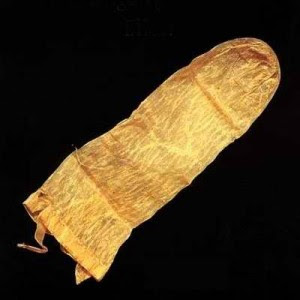
No collection of sex toys would be complete without including a condom - not exactly a toy, but very necessary, given the prevalence of syphilis in the 18th century.
Read more
Read more
If this has whet your appetite for more 18th century sexual titillation feel free to share, pin or general like elsewhere.
Buy, The Finish, the first in the Venus Squared series of novels about an 18th century Covent Garden prostitute on Amazon, Kobo, ibooks and Google Play
1. Polish Dildo unearthed in 18th century toilet
Found by an archealogist in Gdansk, Poland, whilst digging out an 18th century toilet, this dildo is made of leather, filled with bristles and has a wooden tip.
Read more
2. Essex girls prefer....
Sold at an auction in Essex in 2010 and described in the catalogue as "An extraordinary and exceptionally rare 'Travel
Godermiche' being a pair of wooden phallus contained within a fitted kid
leather covered Treen case with strap fleurs-de-lys decoration, one
phallus 10 inches and with testicles and the other 11 inches and without
testicles." Read more
3. Ivory dildo
This magnificent article can be seen in the Science Museum, London. It is complete with plunger that simulates ejaculation. In 2012 it was part of an exhibition at the Wellcome Museum to explore items that make us superhuman.Read more
4. Beggar's Benison Prick Glass
This novelty drinking glass is thought to be from around 1730 and was used by an erotic gentleman's club in Anstruther, Scotland.Read more
5. The Condom
No collection of sex toys would be complete without including a condom - not exactly a toy, but very necessary, given the prevalence of syphilis in the 18th century.
Read more
6. Prostitutes
The ultimate sex toy, of course, was the prostitute. Mrs Phillips ran a sex shop in Half Moon Street, just off Covent Garden. Here, prostitutes and their clientèle could obtain every item above and more besides.Read more
If this has whet your appetite for more 18th century sexual titillation feel free to share, pin or general like elsewhere.
Buy, The Finish, the first in the Venus Squared series of novels about an 18th century Covent Garden prostitute on Amazon, Kobo, ibooks and Google Play
Thursday, 28 August 2014
The Devil's Own Handiwork
"I have experienced much hardship and been forced to view death on many occasions. I was therefore, not bothered by the corpse flies. Thankfully, the all-pervasive aroma of spice somewhat mitigated that of decay and corruption. All the same, I entered the room with my handkerchief at the ready. The man was frozen at the point of death upon the bed. There was much blood, all congealed and writhing with maggots. I could make out little else with the curtains shut and so I drew them open. When I turned I could hardly bear to view the putrefaction. He had died in an attitude of abject terror. His eyes were almost entirely eaten away and his mouth showed a grimace so horrific and his posture that of a supplicant forced to bend to another’s evil will, that I thought I looked upon the Devil’s own handiwork." Extract from The Surety, the second book in the Kitty Ives series. Kitty, an 18th century Covent Garden prostitute is forced to solve the murder or swing from the gallows.
Tuesday, 26 August 2014
Kitty's brothel now
I
took this just before Christmas. It's of the exact building where Kitty
Ives lived and worked as a prostitute in Covent Garden. Well, not the exact building because that burned
down but this is a replacement in the style of the old building.
Research has shown that this building was occupied in 1769 by, on the
ground floor, John Bradley - gin distiller and shop, and a brothel
upstairs. Next door on the Little Piazza was Lovejoy's bagnio, a
portrait painter, and the Hummums Turkish Bath. In the corner was the
Bedford Arms pub. After that came the privy passage which was gated
through to Charles Street beyond. The London Transport Museum occupies
the site now.
Saturday, 16 August 2014
The Finish - what's it all about
The Finish is my new novel featuring Kitty Ives, an 18th century prostitute, who plies her trade in Covent Garden. When a man is found dead in her bed she fears she may swing from the gallows. So begins Kitty's quest to uncover the identity of the murderer.
We are in Covent Garden in 1769. It seethes with all manner of life. It smells. It is dirty and beautiful at one and the same time. It is home to the whores and harridans, aristocrats and artisans, actors and a drunks alike.
Covent Garden
Here we have Covent Garden around the time of our story about Kitty Ives, an 18th century prostitute. The Little Piazza is the covered walkway and buildings at bottom right. The house in question is the one on the corner of the Little Piazza and Russell Street, to the middle of the right hand side of the square.
Subscribe to:
Posts (Atom)